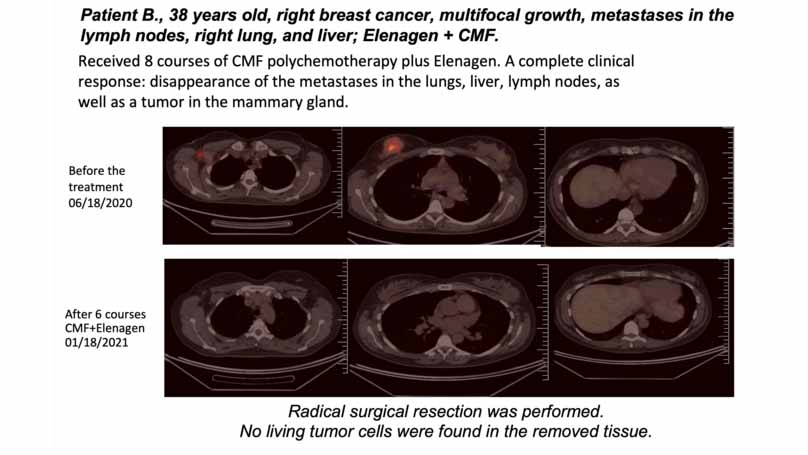
Newswise — A new clinical study published in the International Journal of Gynecological Cancer reports encouraging results for women facing platinum-resistant ovarian cancer (PROC). Researchers evaluated a novel DNA-based therapy, Elenagen, administered in combination with the standard chemotherapy gemcitabine in women with PROC and elevated CA-125. Elenagen is a plasmid therapy—a small, circular piece of DNA encoding the protein p62/SQSTM1 — currently being developed by CureLab Oncology, Inc. In the randomized Phase II trial, Elenagen was administered once weekly via a simple intramuscular injection. In the reporting, researchers supplementing the standard of care (chemotherapy) with Elenagen, have significantly extended overall survival for patients with the deadliest form of ovarian cancer.
Ovarian cancer remains one of the most lethal cancers affecting women. Approximately 1 in 80 women will develop the disease during her lifetime. Each year, over 12,000 women die of the disease in the U.S., and over 200,000 worldwide. While many women initially respond to chemotherapy, the cancer recurs in the majority of cases. Effectively, all women with recurrent cancer eventually develop platinum-resistant ovarian cancer. At this point, treatment options are extremely limited, response rates are low, and average survival is often measured in months, frequently accompanied by significant side effects. Among these patients, those with elevated CA-125 levels have the poorest prognosis.
Key Study Findings
The paper describes key study findings in this randomized Phase II clinical trial:
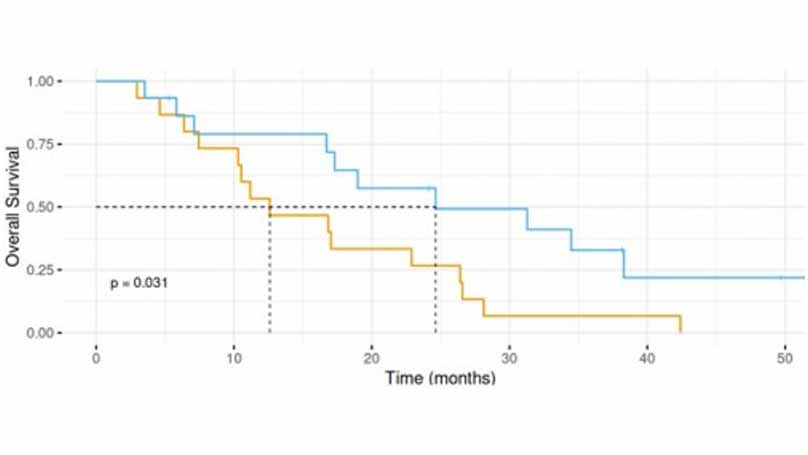
- Extended Survival: Women who received Elenagen plus chemotherapy lived significantly longer than those who received chemotherapy alone.
- Doubled Median Overall Survival: Median overall survival increased from approximately 13 months to over 25 months.
- Reduced Mortality: The risk of death was reduced by nearly 60%.
- High Safety Profile: Importantly, the addition of Elenagen did not increase treatment-related toxicity.
- Long-term Responders: Some patients receiving Elenagen survived several years beyond typical expectations for this clinical setting.
“As a gynecologic oncologist, I see firsthand how devastating platinum-resistant ovarian cancer is for patients and their families,” said Dr. Gabriel Levin, gynecologic oncologist at McGill University Health Centre and co-author of the study. “What makes these findings so meaningful is not only the improvement in survival but the fact that this was achieved without adding toxicity. Our hope is that therapies like Elenagen can shift how we think about cancer treatment by supporting the body’s biology rather than simply escalating chemotherapy.”
Unexpected Scientific Insight from Historical Circumstances
Due to the military situation in the region, all patients in this ex-U.S. trial synchronously stopped receiving Elenagen when new supplies could not be delivered. By that time, treatment durations ranged from 0.7 months to over 30 months. While the original study design intended for administration to continue indefinitely, these circumstances provided serendipitous insights for future trials.
Longer administration of Elenagen strongly correlated with longer patient survival after treatment was terminated. This effect was most evident during the first 12 months, with diminishing—though still significant—extension in life expectancy at 18 months. Consequently, the extended overall survival reported in the paper is considered a "lower bound" because it includes patients who received the therapy for insufficient duration. In planned U.S. and EU trials, CureLab will offer Elenagen for 24 months, as data suggests further treatment may offer no additional benefit.